Firsthand experience note: At 6:30 PM on a Wednesday, nobody wants to stand over a stove chopping onions after an eight-hour workday. I spent years falling into the takeout trap simply because I lacked the energy to make decisions about dinner. Once I automated my week on Sunday, my evenings became relaxing again.
The anatomy of the 6 PM decision trap
You walk into your kitchen tired. You open the refrigerator door and stare at raw chicken breasts, an unwashed head of broccoli, and a jar of mustard.
Your brain feels fried from work meetings and answering emails all afternoon.
Cooking dinner requires fifteen separate decisions. What should I make? Do I have enough garlic? How long will rice take? Who will wash the pans?
When you are drained, your brain chooses the path of least resistance. You close the fridge, pull out your phone, and spend twenty-five dollars on delivery sushi.
The mental load cycle
Here is what happens when you try to cook from scratch every single day compared to batch prepping:
The energy economics of batch cooking
Batch cooking is an investment in your future self.
On Sunday afternoon, your willpower tank is full. You slept in, drank your coffee, and have mental bandwidth to chop carrots, roast sweet potatoes, and simmer quinoa.
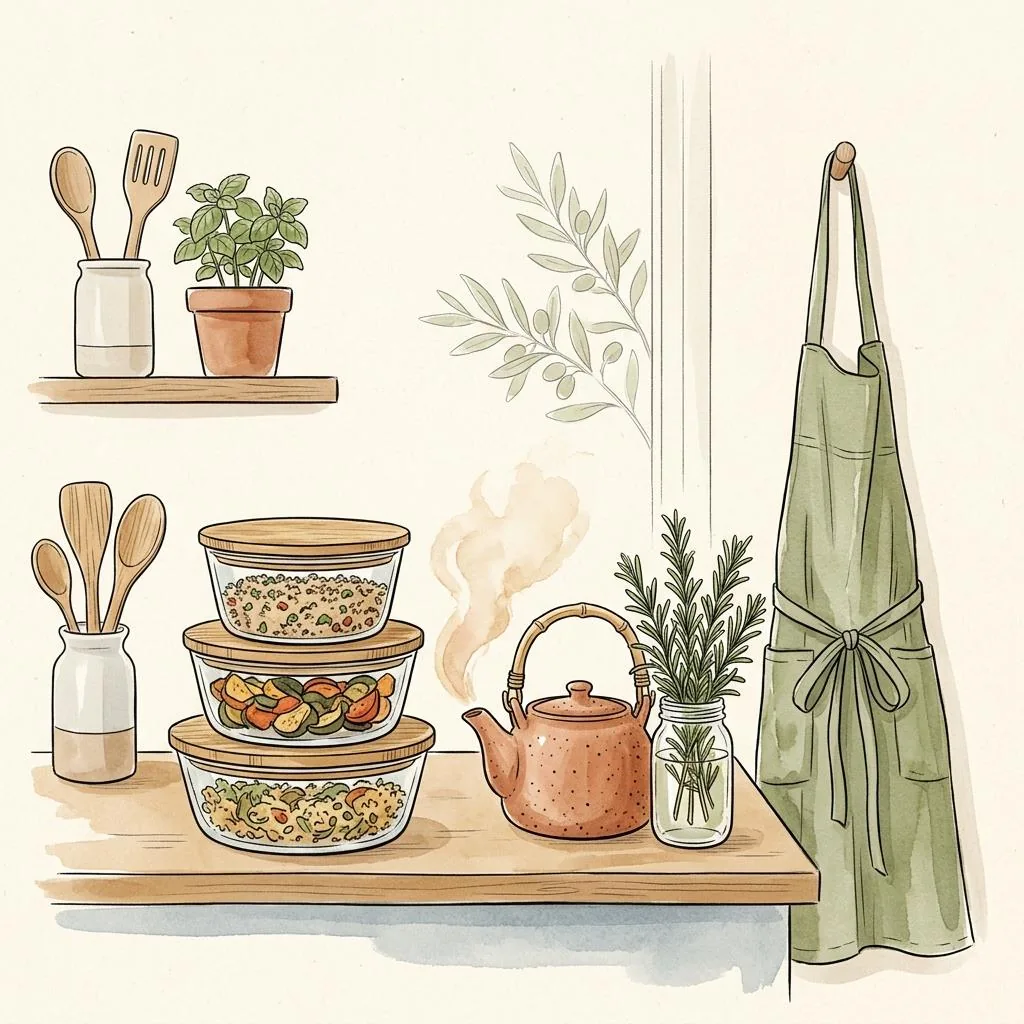
When you finish, you put five clean glass containers in your fridge. You eliminated twenty micro-decisions for the next five days.
On Wednesday night, dinner is already solved. You pull a container from the shelf, reheat it for ninety seconds, and sit down to eat. You have your entire evening back to read, exercise, or rest.
Three kitchen rules that protect your evenings
I follow three practical rules to make sure meal prep relieves stress instead of creating it.
Rule 1: Never prep on a Sunday night after 7 PM
If you start cooking at 8 PM on Sunday, prep becomes an exhausting chore. You will rush through the steps and go to sleep with dishes in the sink.
I start my prep at 2 PM on Sunday afternoon. By 3:30 PM, the kitchen is clean, the counters are wiped, and I have the rest of my weekend to enjoy.
Rule 2: Keep weekday assembly under three minutes
If a prepped meal requires twelve garnishes and firing up three pans to finish, you will skip it on a busy night.
Everything in your fridge should be ready to eat cold or hot straight out of the box. Add a drizzle of sauce and grab your fork.
Rule 3: Give yourself one takeout pass
I prep meals for Monday through Thursday. On Friday night, I intentionally cook nothing.
Leaving Friday open gives you something to look forward to. It also prevents food waste if friends invite you out for dinner.
The financial relief: saving $350 a month
The mental toll of weekday cooking is tied directly to money anxiety. Delivery apps charge menu markups, service fees, delivery charges, and driver tips.
| Weekday Strategy | Avg. Cost Per Meal | Weekly Total (10 Meals) | Monthly Impact |
|---|---|---|---|
| Delivery App Orders | $24.50 | $245.00 | $980.00 / month |
| Fast Casual Takeout | $14.20 | $142.00 | $568.00 / month |
| Sunday Batch Prep (Home) | $3.80 | $38.00 | $152.00 / month |
| Net Monthly Savings with Batch Prep | $416.00 to $828.00 saved every month | ||
Zero-scrub kitchen cleanup routines
Pots soaking in the sink on a Tuesday night is a major source of household friction. Batch cooking reduces your dishes to one single cycle.
Line both of your baking sheets with unbleached parchment paper. When your sweet potatoes and chicken finish roasting, you throw the paper away. The baking sheets stay clean.
Rinse your cutting board and chef knife immediately after chopping. Put your single grain pot and bean pot into the dishwasher on Sunday afternoon.
For the next four days, your only dirty dishes are one glass container and one fork per meal.
The emergency 10-minute dinner pantry backup
Life is unpredictable. Some nights you drop a prepped container on the floor, or you work three hours late and crave hot comfort food right away.
I keep three non-perishable staples in my pantry cabinet for these exact moments. A box of quick-cooking soba noodles, a can of seasoned black beans, and a jar of crunchy peanut butter.
Boil the noodles for four minutes. Whisk two spoonfuls of peanut butter with soy sauce, warm water, and red pepper flakes in a cereal bowl.
Toss the hot noodles and rinsed beans directly into the sauce. You have a warm, filling dinner in seven minutes flat without opening a delivery app.
Frequently asked questions
What if I do not feel like eating what I prepped on Wednesday?
That is why component cooking is superior to static casserole boxes. If you do not want a grain bowl, toss your prepped chicken and peppers into a tortilla with cheese for a quick quesadilla.
Does meal prep feel boring after a few weeks?
It only feels boring if you keep buying the same seasoning. Change your spice blends each weekend. Use curry powder one week and Mexican chili spices the next.
How do I stay motivated to prep on Sunday?
Put on a podcast or your favorite music album. Treat those 75 minutes as personal relaxation time rather than a chore.